

Thank you for Subscribing to Utilities Business Review Weekly Brief
Utilities Business Review: Specials Magazine
When disaster strikes, response time and efficiency can mean the difference between swift recovery and prolonged disruption. For utility companies, managing storm-related emergencies is a colossal challenge requiring an extensive workforce, specialized expertise, seamless coordination, and the ability to adapt to unpredictable conditions that can change in an instant. The stakes are high—delays can lead to prolonged outages, safety hazards, and significant financial losses, all of which directly impact the communities they serve. Tempest Energy was established by former utility professionals with a deep understanding of utility operations and regulatory requirements to bridge this critical gap for utility companies, including electric power providers. More than just a service provider, the company is a strategic partner that delivers turnkey solutions for pre- and post-event conditions to restore power quickly and safely. It specializes in helping utilities mitigate risks before disaster strikes and execute efficient recovery efforts when they do, all through proactive storm preparation and rapid response strategies. The result? Minimized downtime, reduced financial strain on utilities, and faster service restoration for end consumers, ensuring communities remain safe and resilient in the face of disruption. An Award-Winning Company Built on Experience and Innovation “Tempest Energy was founded on the realization that natural disasters are growing in frequency and severity, often exceeding utilities’ capacity to respond effectively. Grid disruption devastates millions of lives, placing immense pressure on utilities to restore power with limited resources. Beyond the immediate impact, prolonged outages can cripple businesses, strain emergency services, and stall economic recovery,” says Mike Zappone, COO. Recognizing this challenge, Tempest Energy provides experienced personnel, advanced planning, and innovative response strategies to bridge the gap between demand and available resources. Its mission is clear: to build a more resilient grid, reinforce infrastructure, and restore essential services so communities can return to normalcy as quickly as possible. Whether responding to hurricanes, wildfires, or ice storms, Tempest provides scalable solutions tailored to each crisis scenario. These efforts have been recognized by utilities, such as Entergy, which awarded its 2023 Premier Storm Award for Storm Response. The Tempest Way of Excellence Today, Tempest has expanded into a family of companies, each specializing in different aspects of storm response and remediation. For instance, Tempest Storm Rentals ensures critical equipment and cutting-edge tools are always within reach—often just a phone call away—and can deliver directly to the job site. This allows crews to focus on their work rather than losing valuable time sourcing equipment. Additionally, Tempest Fleet Services provides upfitting and repair solutions for trade allies, supporting operational readiness across the board. “At Tempest, we have proprietary processes that we rely on and protect, everything from how we prepare for events and support our customers to how we mobilize and coordinate internally. These processes guide our outreach, response strategies, and the way our operating companies work together to deliver seamless, multi-tiered support. It’s what makes our approach effective and uniquely Tempest,” says Zappone. A typical Tempest client engagement begins with understanding and documenting clear expectations to align with the customer’s emergency response plan and executive, legislative, and regulatory stakeholder requirements. Once capabilities, expectations and services are defined, a formal agreement outlines the scope, costs, and terms, recognizing that each storm may require adjustments. Transparent pricing structures are established, and the customer requests services based on the agreement when a need arises. Key details—such as response scope, resource allocation, and estimated arrival times—are confirmed before Tempest executes the response, meeting or exceeding expectations. This cycle repeats as needed, reinforcing a dependable and efficient partnership.

Power Generation Company of the Year 2025
Talen Energy (NASDAQ: TLN): Building Bridges to a Cleaner, Smarter Energy Landscape Talen Energy (NASDAQ: TLN) is a leading independent power producer and infrastructure company committed to generating reliable, clean energy for the modern world. As one of North America’s largest competitive power infrastructure companies, Talen Energy is reshaping the future of energy by focusing on decarbonization, sustainability and meeting the growing demand for digital infrastructure. Its diverse power generation portfolio uniquely positions the company to drive the energy transition while maximizing stakeholder value. The company operates 12 power generation plants across the U.S., with a combined capacity of approximately 10.7 GW. These facilities utilize various energy sources, including nuclear, natural gas, coal and oil, enabling Talen Energy to provide reliable, dispatchable energy to residential, industrial and commercial customers. Among its key assets is the Susquehanna Nuclear Facility, one of the largest nuclear plants in the region. It is a cornerstone of Talen Energy’s efforts to supply clean, low-carbon energy. Talen Energy’s diverse generation portfolio ensures that it can meet round-the-clock energy demands while preparing for the future of energy production. The company mainly focuses on the growing demand for clean, reliable power in data centers, which are increasingly critical to supporting industries such as artificial intelligence and cloud computing. Phasing Out Coal, Powering Up Sustainability The world is progressing toward a more sustainable energy future. Talen Energy is committed to addressing some of the industry’s most pressing challenges, including reducing carbon emissions and transitioning away from fossil fuels. The company has set an ambitious target to reduce CO2 emissions by 75 percent by 2030, compared to a 2010 baseline. This goal is part of Talen Energy’s broader strategy to decarbonize its fleet and reduce its environmental impact. Talen Energy has also committed to eliminating coal use at its wholly owned generation facilities by 2028, which will remove approximately 5 GW of coal-fired capacity. The company has converted its Montour and H.A. Wagner plants to cleaner energy sources. Reducing emissions involves more than just transitioning to cleaner fuels; it also ensures that power remains reliable and affordable. Talen Energy has successfully balanced both by investing heavily in advanced environmental controls and switching to cleaner fuels. This approach allows the company to meet growing energy demands without sacrificing ecological goals. These efforts are central to Talen Energy’s mission of delivering the most value per megawatt of energy produced while working toward a sustainable future.

CXO INSIGHTS

OptimizEV Helps Shape a Clean Energy Future
Sean K. Sullivan, Senior Director - Clean Energy Policy, Avangrid

Strategic Initiatives for a Cleaner Energy Future
Ivon Louis-Letang, Energy Manager, Eversource Energy

Aligning Technology with Business Goals for Improved Efficiency
Raied Stanley, Vice President, Chief Information Officer, Southwest Gas Corporation

Modernizing Internal Auditing
Stephen Harrison, Director of Internal Audit, California Water Service

Building an HR Department for Maximum Impact
Stan Weeks, SVP CHRO & President of NAES Renewables, NAES Corporation

Sustainable Manufacturing is Not Only Practical but Attainable
Patricia Provot, President, Armstrong International

Embracing the Cloud: Summit Utilities Transition to Azure
Cannon Lord, Manager, Data Engineering, Summit Utilities, Inc


IN FOCUS
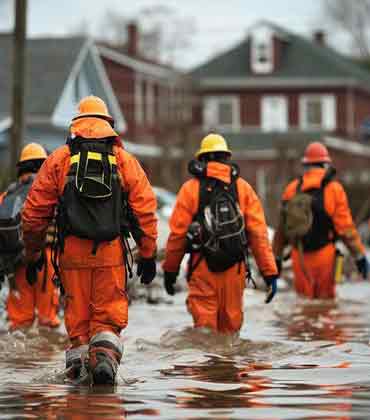
Empowering Emergency Response with Storm Recovery Services
The predictive models allow decision-makers to pre-position resources, plan evacuation routes, and notify at-risk communities well in advance.

EDITORIAL
Superior Storm Response: Innovation Driving Restoration Industry Success
As extreme weather events escalate in frequency and intensity, storm preparedness and disaster recovery have moved from optional strategies to operational imperatives. Across industries and municipalities, storm response and restoration services have emerged as essential partners in safeguarding infrastructure, minimizing downtime and restoring normalcy.
From hurricanes and wildfires to floods and winter storms, these services provide much more than emergency cleanup. They offer end-to-end support, including damage assessments, debris removal, water extraction, structural drying, environmental remediation and full reconstruction, all delivered with speed, precision and a deep understanding of regulatory and safety requirements.
Technology plays an increasingly important role in facilitating rapid, coordinated responses. Real-time GIS mapping, mobile coordination platforms and cloud-based documentation tools enable seamless deployment, transparent reporting and faster insurance processing. These innovations allow storm response professionals to operate with the efficiency of a well-oiled logistics network while maintaining the empathy and resilience that disaster recovery demands.
This edition of Utilities Business Review explores how high-performing storm response and restoration services are transforming disaster management into a proactive, tech-enabled and human-centered discipline. Featured thought leaders include Cannon Lord, manager, data engineering at Summit Utilities, Inc., who emphasizes that cloud adoption, when approached strategically, can reshape utility operations and open doors to continuous improvement and innovation. Patricia Provot, president at Armstrong International, calls for a shift in mindset: rather than waiting for policy mandates or emerging technologies, manufacturers should act now by rethinking how they manage thermal energy.
The magazine also spotlights leaders like Tempest Energy, which provides utility services focused on storm response, grid resilience and safety. Backed by over a century of leadership experience, it offers exceptional planning, execution and restoration capabilities.
We hope this edition offers valuable insight into how industry leaders are advancing the future of emergency recovery and infrastructure resilience. Let us know your thoughts!
