


Thank you for Subscribing to Utilities Business Review Weekly Brief


 Andrew Frey, Chief Electrical Engineer
Why are field-based industries demanding continuous-duty mobile electricity beyond traditional infrastructure?
As service industries expand into field-based operations, the demand for utility-grade electricity extends beyond traditional infrastructure. From HVAC repair and utility maintenance to mobile diagnostics and food service, equipment that once depended on permanent utility connections must operate under continuous-duty conditions. This shift is redefining electrical engineering standards, requiring systems designed for sustained loads, high inrush currents and industrial-grade performance.
AIMS Power engineers systems specifically for this evolving requirement.
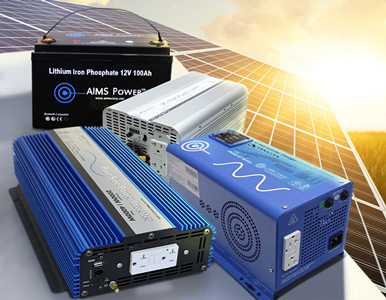 It began with low-frequency inverter chargers designed to start heavy motors and sustain continuous-duty operations. That foundation has evolved into a broader ecosystem that includes pure sine inverters, inverter-only platforms aligned with high-output alternator systems, all-in-one generator-replacement units that integrate batteries and solar input, and complementary DC-to-DC and MPPT charging solutions. Configurations span 12V, 24V and 48V platforms, with split-phase 120/240V and three-phase options and selectable 50Hz or 60Hz frequency for domestic and international deployment.
Alongside established low-frequency inverter charger systems, engineering teams are advancing high-frequency inverter designs that reduce size and weight while maintaining heavy-load capability.
“We listen to how customers use power in the field and engineer customized systems to match those conditions,” says Andrew Frey, chief electrical engineer.
Engineering Defined by Load Behavior
How does AIMS design power systems based on real-world load behavior?
AIMS differentiates itself through engineering intent. System design begins with understanding how customers use power in real operating conditions rather than relying solely on standard product configurations.
Factors such as motor startup requirements, available charging capacity and overall load demand are considered when developing systems for specific applications.
When applications require variation—voltage refinement, ignition-trigger integration, upfitter switch compatibility or programmable charge logic—platforms are reviewed through internal engineering assessment. Non-standard requests are translated into configurations aligned with a client’s operational requirements, an area where competitors often limit modification. Many of these specifications originate from manufacturers and vehicle upfitters refining established installations.
We listen to how customers use power in the field and engineer customized systems to match those conditions.
Delivering Continuity Under Load
What engineering lessons shaped modern mobile power systems for sustained heavy loads?
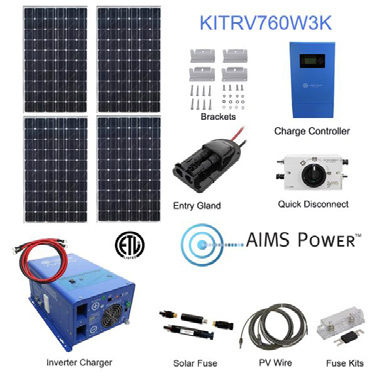 Current mobile power architecture reflects lessons learned from early deployment limitations. Many vehicles once relied on compact inverters intended for intermittent accessory use. When service trucks transitioned into continuous-duty job sites, those systems proved inadequate under sustained operational demand.
Starting heavy motors places significant demand on power systems. Extended operation also requires equipment capable of sustaining power delivery for longer working cycles. As more equipment began operating from vehicle power systems, overall power demand increased.
These limitations redirected engineering priorities.
Today, AIMS structures its systems around the sustained power requirements commonly found in service vehicles. Low-frequency inverter chargers are engineered to start heavy motors while maintaining reliable performance during extended operation. The objective is consistent performance throughout full operating cycles.
-
We don’t just manufacture it, we use it and live it.
Battery banks are sized to extend runtime without compromising startup tolerance. Because many vehicles now include higher-output alternators, some systems can operate with smaller battery banks while drawing support from onboard charging. In deployments prioritizing extended autonomy, increased lithium iron phosphate capacity provides longer operating windows between recharge cycles.
Lithium iron phosphate batteries are designed to support repeated charging cycles and reliable operation in demanding environments, including cold conditions. Compared with AGM and lead-acid systems, lithium platforms extend usable lifespan while improving efficiency within constrained vehicle footprints.
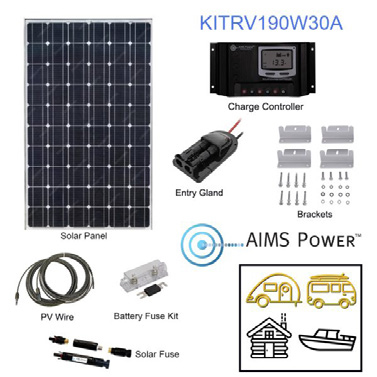 “Instead of five years, these batteries can last 20 years or more before replacement,” says Frey.
These refinements reflect ongoing feedback from field users who require systems that start reliably and endure daily cycles without premature replacement. The result is stable output across full operating cycles.
Turning Deployment Variability into Advantage
Mobile deployments rarely follow uniform specifications. Fleet operators, OEM partners and vehicle upfitters require ignition-trigger activation, alternative voltage outputs, programmable charge profiles and remote monitoring capability. Systems are designed to integrate with factory upfitter switches and allow Bluetooth based on/off control directly from mobile devices, eliminating the need to manually access the equipment.
AIMS channels specification changes into a structured engineering review rather than an ad hoc adjustment. Feedback from customers and field deployments is communicated to the engineering team and incorporated into future product development. Tailored builds then move into production without extended redesign phases, keeping release timelines aligned with operational demands.
Once installation flexibility and system durability are established, attention shifts to the source architecture itself.
Replacing Mechanical Dependency
Why are mobile power users shifting from generators to integrated electrical systems?
Customers increasingly seek alternatives to fossil-fuel generators, citing logistics, maintenance burden and evolving environmental regulations as factors influencing long-term equipment decisions. State-level restrictions on small-engine equipment, including measures such as California’s generator regulations, accelerate the transition toward integrated electrical systems.
AIMS designs consolidated electrical architectures intended to reduce or eliminate dependence on fuel-based generators. Power conversion units paired with lithium iron phosphate storage provide a stable AC output without mechanical engines. Integrated configurations combine conversion, storage and optional solar input into compact packages capable of serving as primary mobile power sources across a range of applications.
Beyond vehicle applications, solutions extend into residential, marine and commercial environments through inverter chargers with automatic transfer switching, industrial battery chargers, DC-to-DC charging systems and MPPT solar controllers optimized for variable photovoltaic conditions.
Also offered are complete, off-grid solar kits for homes and cabins where utility access is limited or unavailable. Systems are configured according to measured load requirements, reinforcing an application-driven engineering methodology. Configurable split-phase and multi-phase systems extend applicability in higher-load environments.
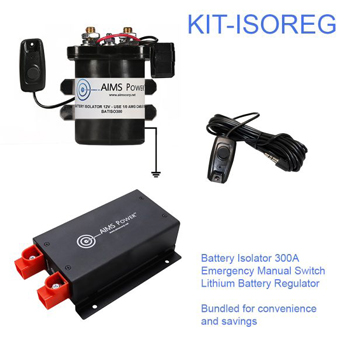 Products are distributed through online channels and established international networks supported by technical documentation and application guidance. Expansion of representative coverage across defined U.S. territories continues alongside collaboration with manufacturers, distributors and vehicle upfitters to ensure evolving load requirements inform ongoing development.
AIMS operates its facility independent of the utility grid, powered by a 200 kW inverter, a 380 kW battery bank and a 90 kW solar array. The deployment reflects the same load-based engineering approach applied across customer environments.
“We don’t just manufacture it, we use it and live it,” says Frey.
As vehicle architectures evolve and power demands increase, efficiency, charge management and component lifespan play a larger role in overall system value. Optimized conversion performance combined with advanced lithium integration extends service intervals while reducing replacement cycles in demanding field environments.
Recognized as the Buyer’s Choice Off-Grid Manufacturer of the Year 2026, AIMS Power’s distinction reflects sustained performance under working conditions where reliability is not optional.
Engineering around how power is used and grounding every design decision in customer input, AIMS Power delivers power systems that preserve operational continuity and maintain performance across full service lifecycles.
Powering Mobile Enterprise: Choosing a Modern Off-Grid Energy Partner
Enterprise energy strategy is shifting away from fixed infrastructure toward distributed, application-specific power. Growth in mobile service fleets, utility repair vehicles, food delivery operations and field-based trades has created sustained demand for onboard AC power that can run tools, refrigeration, grooming equipment and diagnostic systems once limited to brick-and-mortar settings. Regulatory pressure, including state-level restrictions on small engine generators, is accelerating this transition. Executives responsible for sourcing offgrid energy equipment are no longer evaluating backup devices. They are assessing integrated power platforms that must perform daily under load, across climates and in compliance with evolving standards.
In this environment, equipment designed for occasional recreational use rarely satisfies enterprise requirements. Continuous-duty applications in work trucks and service fleets place heavy electrical loads on inverters and battery banks. Systems must start large motors reliably, manage sustained draw and integrate cleanly with vehicle electrical architecture. Products that cannot handle these conditions create downtime, service delays and reputational risk. Buyers therefore need manufacturers that engineer for heavy loads from the outset rather than adapting consumer-grade components after the fact.
The pace of change in mobile power demand also requires a partner that can respond to specific voltage requirements, switching preferences and ignition integration. Field operators increasingly expect inverters that can be controlled through upfitter switches, ignition triggers or Bluetooth monitoring rather than manual toggles at the device. Customization cycles must be short. Engineering teams must be willing to adjust specifications, prototype, test and release updated configurations without prolonged lead times. For large fleet operators and upfitters, the ability to modify an existing platform rather than redesign from scratch reduces deployment friction.
Regulatory and geographic variability add another layer of complexity. Generator restrictions in states such as California are prompting enterprises to replace fossil-fuel units with inverter-battery systems that incorporate solar input. Climate conditions in northern and southern markets demand battery chemistries that tolerate fast charging, deep discharging and temperature swings. Lithium iron phosphate platforms with integrated heating features and extended lifespan are gaining favor over legacy AGM or leadacid systems that require frequent replacement. Efficiency becomes central not only for runtime but also for total cost of ownership. Higher efficiency translates into longer service intervals and fewer component swaps over a decade of use.
Finally, reliability and support remain decisive. Distributed power deployed across fleets cannot depend on distant troubleshooting. Buyers should prioritize manufacturers that maintain domestic technical support, maintain tight quality control and validate products before release. Low failure rates are not marketing claims; they are procurement safeguards that reduce warranty exposure and installation rework.
Against this backdrop, AIMS Power presents a compelling case. It began by engineering low-frequency inverter chargers capable of starting large motors and sustaining heavy daily loads. It later separated charging functions where vehicle alternators made them unnecessary and developed inverter-only models suited to modern fleets. Responding to generator restrictions and customer demand, it introduced all-in-one systems that combine inverter, battery and solar input as a direct replacement for small engines. Its expansion into lithium iron phosphate batteries with extended lifespan and climate tolerance aligns with enterprise durability expectations. The company’s practice of incorporating ignition control, Bluetooth monitoring and rapid custom modifications, supported by US-based technical teams and a documented sub-1% failure rate, positions it as a disciplined partner for mobile and remote power deployment. For executives modernizing fleet and off-grid infrastructure, it represents a credible long-term choice.
...Read more
