

Thank you for Subscribing to Utilities Business Review Weekly Brief
Utilities Business Review: Specials Magazine
Sorbster
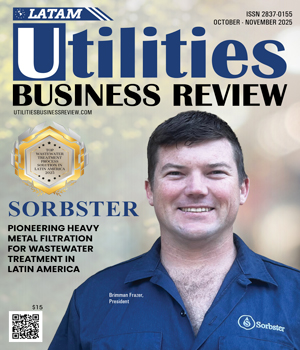
Pioneering Heavy Metal Filtration for Wastewater Treatment in Latin America
Industries such as oil and gas, construction, manufacturing, and dewatering are under growing pressure to comply with increasingly stringent water discharge standards. As environmental standards get stricter, the challenge of managing complex wastewater streams has become increasingly urgent. This is especially true for streams contaminated with dissolved heavy metals such as mercury, arsenic, cadmium, and selenium. Traditional chemical and biological treatments often fall short, struggling to meet these stringent removal requirements, which in turn increases operational costs and complexity. Sorbster addresses these gaps while tackling some of the most pressing environmental and industrial challenges, transforming the landscape of wastewater treatment— particularly in Latin America. With a breakthrough approach to filtration, the company specializes in removing heavy metals and other complex contaminants from wastewater, providing industries and municipalities with efficient, cost-effective, and environmentally responsible solutions. Known for its proprietary filtration media co-developed with the U.S. Environmental Protection Agency (EPA) through a Cooperative Research and Development Agreement, the company has positioned itself as a leader in treating wastewater at parts per trillion (PPT) concentrations, particularly in environments where traditional chemical and biological methods fall short. At the core of Sorbster’s innovative solutions lies its proprietary filtration media, designed to target dissolved heavy metals with unparalleled precision. These heavy metals, including mercury, arsenic, cadmium, selenium, and hexavalent chromium, often pose significant challenges for wastewater treatment in industrial and municipal contexts. Sorbster’s media selectively bond to these metals through chemisorption, a process that allows the metals to be permanently bonded to the filtration media via covalent bonds. The technique ensures that once the metals are removed from wastewater, they cannot be released back into the environment. “The level of precision and permanence sets us apart from conventional methods, which often rely on more reactive processes that can lead to leaching or require further treatment,” says Brimman Frazer, president, Sorbster. The company’s heavy metal filtration technology is groundbreaking in terms of efficacy and also offers numerous operational advantages. Its filtration media require minimal intervention once deployed. This reduces the operational burden on clients, particularly in remote areas or facilities with limited staff. Additionally, Sorbster’s filtration systems do not support bacterial growth, a common issue in biological treatment methods, ensuring that the media remains effective over time without requiring periodic system resets. “Our data-driven approach allows us to ensure that the solutions we provide will work efficiently and cost-effectively. We focus on ensuring quality and reliability in every step of the process, from research and development to implementation,” says Frazer.
Utilities Consulting

Strategic Initiatives for a Cleaner Energy Future
Ivon Louis-Letang, Energy Manager, Eversource Energy
Wastewater Treatment Service

The Evolution and Integration of Renewable Energy
Jim Helvig, P.E., Vice President Operations, Dashiell Corporation
Utilities Construction

Pacing Along the Energy Evolution
Julian Kaufmann, Chief Commercial Officer, CAMS
Wastewater Treatment Service

How Recent Technological Advancements are Paving the Way to an Energy-Efficient Future
Seth Little, Director, Market Development and Partnerships, CLEAResult
Utilities Construction

Navigating Complexity in Gas Utility Construction, Strengthening Risk Mitigation
Awet Haddis, Senior Project Manager, Puget Sound Energy
Solar Energy

DTE Energy Lights the Way with Biodiversity Efforts
Christy Clark, Director, Environmental Management and Safety, DTE Energy
Wastewater Treatment Service

Leading the Energy Transition
Lora Anguay, Chief Energy Resources Officer, SMUD

IN MY OPINION
Wastewater Treatment Service
OptimizEV Helps Shape a Clean Energy Future
Sean K. Sullivan, Senior Director - Clean Energy Policy, Avangrid

LAST WORD
Turbine
Building Equitable Pathways in Western Energy
Pamela Sporborg, Director, Transmission & Markets, Portland General Electric [NYSE: POR]
IN FOCUS

Innovative Wastewater Treatment Approaches in Latin America
Latin America is adopting innovative wastewater treatment solutions through local adaptation, institutional support, and community engagement for sustainable development.
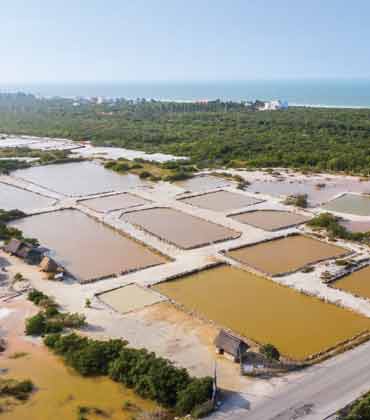
Challenges of Wastewater Treatment Plants in Latin America: Pathways to Sustainable Solutions
Integrating digital tools and real-time monitoring can optimize operations and support proactive maintenance.
EDITORIAL
Transforming Wastewater into Opportunity
The urgency to improve wastewater treatment is not new. For years, industries and cities have grappled with rising water stress, pollution, and tightening environmental regulations. What has changed is the approach. The focus is steadily shifting from wastewater disposal to resource recovery and reuse, signaling a fundamental transformation in how water is managed.
Innovations in membrane filtration, biological treatment, and chemical-free purification are making systems more efficient, cost-effective, and environmentally responsible. The integration of digital monitoring and automation further enhances process control, helping operators predict issues, optimize performance, and reduce energy consumption.
Yet, technology alone is not enough. Real progress depends on collaboration between policymakers, technology providers, and industries to build scalable, circular water systems that turn treated wastewater into a viable resource.
Advanced treatment solutions are redefining wastewater not as an end byproduct but as the beginning of a regenerative cycle. Each drop recovered contributes to sustainability, resilience, and long-term water security.
In this edition, we spotlight advanced wastewater treatment as a cornerstone of sustainable water management. Companies like Sorbster, a Cleveland-based innovator founded in 2019, are redefining the field with proprietary filtration media co-developed with the U.S. Environmental Protection Agency (EPA) under a Cooperative Research and Development Agreement (CRADA).
We also present insights from expert CXOs Sean K. Sullivan, senior director - clean energy policy, Avangrid and Awet Haddis, project manager III, Puget Sound Energy, who offer their opinions on the currently used business practices. We hope that the valuable insights from industry leaders and the solutions and services featured in this edition will assist you in making informed decisions for your business.
