

Thank you for Subscribing to Utilities Business Review Weekly Brief
Utilities Business Review: Specials Magazine

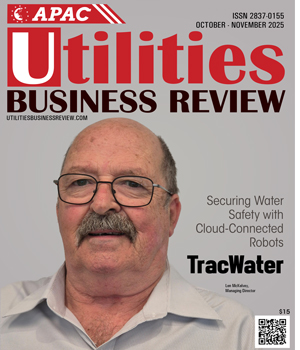
Globally, drinking water utilities face a common challenge; how to guarantee safety with monitoring methods designed for the last century. Manual grab sampling and laboratory testing capture only a handful of monthly data points. They miss countless fluctuations determining whether water remains disinfected and safe as it travels through vast distribution networks. this gap brings compliance risks, regulatory scrutiny and in some cases, serious threats to public health. TracWater, an Australian innovator in real-time water quality monitoring, is changing that reality. Combining robotic sensors, wireless telemetry and cloud-based analytics provides utilities, industries and remote communities with continuous, geo-mapped insight into water safety and performance. Instead of waiting for lab results, operators receive actionable intelligence every five minutes, evidence they can use to respond faster, optimize disinfection and protect consumers. “Water quality cannot be left to guesswork between occasional samples. Real-time monitoring is the only way to ensure safety and compliance and that’s exactly what we deliver,” says Len McKelvey, Managing Director. Not all monitoring systems are built the same and TracWater never aimed for average. Early on, the team recognized that no single group could bridge sensors, cloud and utility operations. Sensor makers understood chemistry but not connectivity. IT firms knew cloud but not water. Utilities knew their networks but struggled to integrate both. The result was complexity and oversight too slow to protect public health.
CXO INSIGHTS

Wringing Value from Every Drop
Catherine Schladweiler, Manager, Environmental Policy and Sustainability, Tucson Electric Power Company

Watercare's Journey Towards Sustainability: Harnessing Solar Energy
Damien Dupont, Project Manager - Renewable Energy Strategy & Planning, Watercare Services

The Role of Leadership in Cultivating an Inclusive Safety Culture in Electric Utilities
Courtney Allen, Director, Electric Operations, PECO
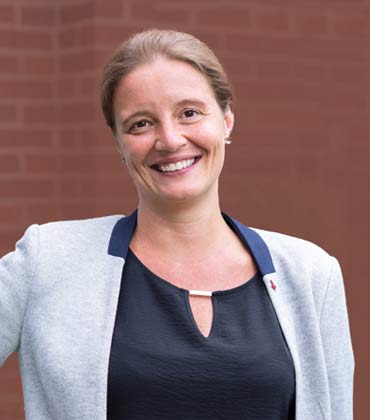
Sustainable Manufacturing is Not Only Practical but Attainable
Patricia Provot, President, Armstrong International

Innovation in Renewable Energy Asset Management
Robert Gomez, Head of Onshore Asset Management, Ørsted

Evolving Energy Choices with the Customer in Mind
Leslie Myers, Product Manager, Renewables, Puget Sound Energy

Transforming Data Analytics at Summit Utilities: The Microsoft Fabric Revolution
Cannon Lord, Manager, Data Engineering, Summit Utilities
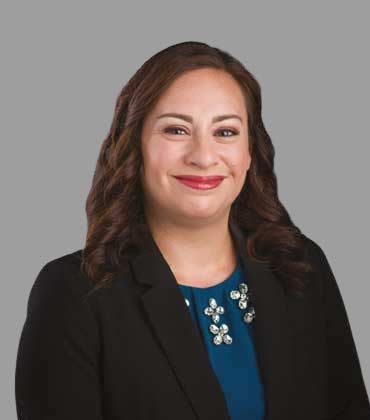
Championing Strategic Leadership in Water and Forest Sustainability
Elvy Barton, Water and Forest Sustainability Senior Manager, Salt River Project
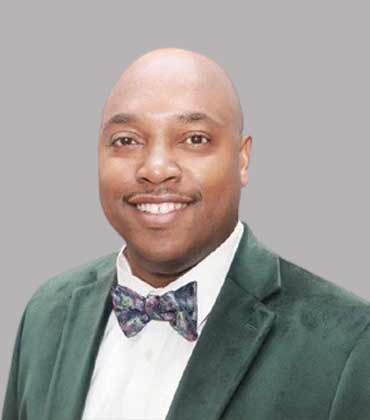
Effective Financial Risk Management
Gilbert Asamoah, Credit Risk Manager, NiSource

IN FOCUS
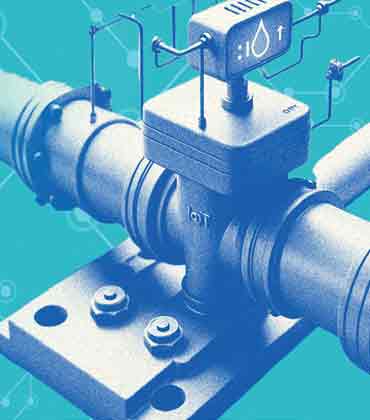
Significance of Water Safety with IoT-Based Wireless Monitoring in APAC
IoT-based wireless water monitoring in APAC ensures real-time safety, operational efficiency, and sustainable management, addressing public health, industrial, and environmental water challenges.
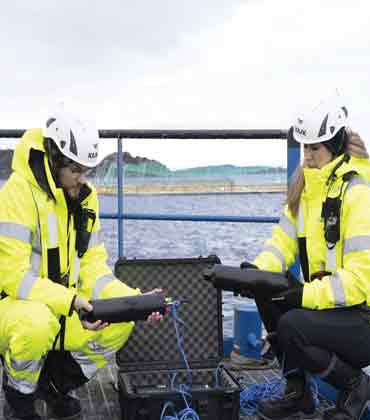
Scaling Wireless Water Quality Monitoring Across APAC
Wireless water quality monitoring in the APAC region enables real-time detection, efficient resource management, regulatory compliance, and community protection through the use of scalable sensors, connectivity, analytics, and governance tools
EDITORIAL
When Water Finds Its Voice through Data Intelligence
Across cities, farmlands, industries and coastlines, water is finally being heard. What was once tested by hand and logged on paper is now streaming live through networks of sensors and wireless nodes that read its every shift, including pH, turbidity, conductivity and flow. These systems are transforming how governments, utilities and industries protect their most vital resource, bringing intelligence and immediacy to what was once slow and reactive work.
Wireless water quality monitoring solutions mark a new era of visibility. Compact sensors transmit data through low-power networks to cloud platforms, which interpret patterns in real-time. An unusual rise in ammonia at a treatment plant, a sudden drop in dissolved oxygen downstream of an industrial site; each signal becomes actionable within moments. With AI learning from past data, these platforms now predict contamination risks before they reach people or ecosystems.
In the Asia-Pacific region, where urban growth and climate volatility stretch water infrastructure to its limits, adoption is accelerating. Municipal agencies are digitizing water systems, industrial users are monitoring effluent more transparently, and agriculture is turning to sensor networks to optimize irrigation while preventing runoff.
Driven by these trends, the global water quality monitoring sector is projected to surpass $8.5 billion by 2030, with APAC leading much of that growth.
The magazine features a thought-provoking article by Patricia Provot, President at Armstrong International, highlighting how sustainable manufacturing is not a distant goal but an achievable reality that strengthens both environmental responsibility and profitability. Additionally, an article by Courtney Allen, Director of Electric Operations at PECO, discusses how leadership drives an inclusive safety culture within the electric utilities sector, where the risks of high-voltage operations demand both physical and psychological safety.
We hope this edition offers insights that help environmental leaders, utility operators, and technology innovators harness data intelligence, strengthen monitoring efficiency and stay prepared for what’s next in a world where wireless networks, real-time analytics, and smart sensors are redefining the future of water stewardship.
