
Thank you for Subscribing to Utilities Business Review Weekly Brief


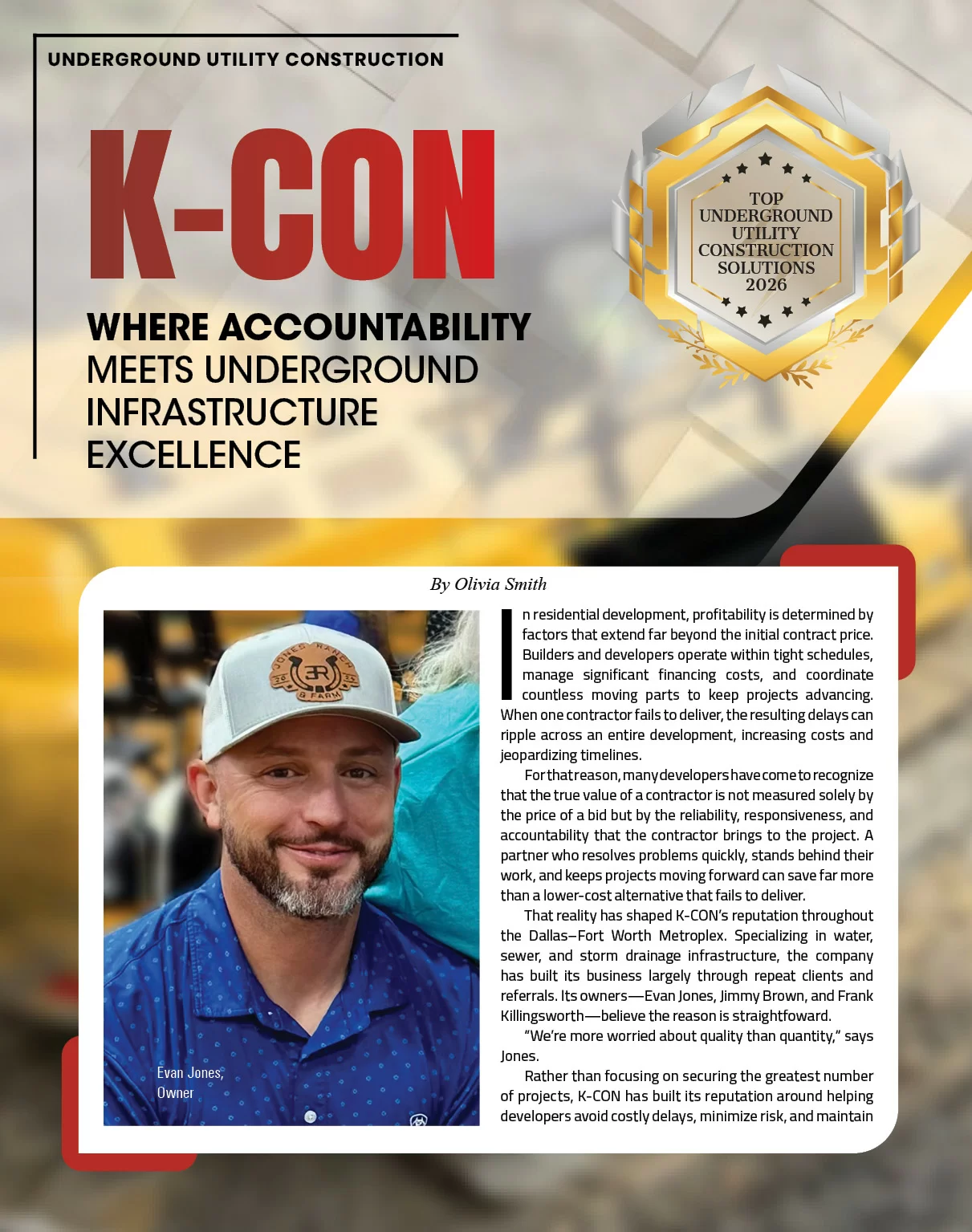
In residential development, profitability is determined by factors that extend far beyond the initial contract price. Builders and developers operate within tight schedules, manage significant financing costs, and coordinate countless moving parts to keep projects advancing. When one contractor fails to deliver, the resulting delays can ripple across an entire development, increasing costs and jeopardizing timelines.
For that reason, many developers have come to recognize that the true value of a contractor is not measured solely by the price of a bid, but by the reliability, responsiveness, and accountability that contractor brings to the project. A partner who resolves problems quickly, stands behind their work, and keeps projects moving forward can save far more than a lower-cost alternative that fails to deliver.
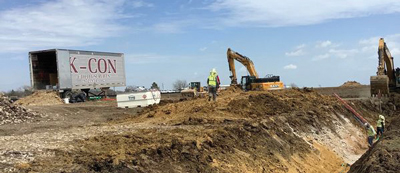 That reality has shaped K-CON’s reputation throughout the Dallas–Fort Worth Metroplex. Specializing in water, sewer, and storm drainage infrastructure, the company has built its business largely through repeat clients and referrals. Its owners—Evan Jones, Jimmy Brown, and Frank Killingsworth—believe the reason is straightfoward.
“We’re more worried about quality than quantity,” says Jones.
Rather than focusing on securing the greatest number of projects, K-CON has built its reputation around helping developers avoid costly delays, minimize risk, and maintain gathering information from multiple departments before offering a solution. He already understands the manpower, equipment, logistics, and field conditions involved, allowing him to make decisions quickly and communicate with confidence. Equally important, clients know they are speaking directly with someone who has the authority to act. That direct accountability has become one of the company's most significant advantages.
Learning the Business from the Ground Up
Long before he was overseeing multimillion-dollar projects, Jones was learning the realities of construction firsthand. His introduction to the trades came early, and by the time he entered the utility construction industry in 2011, he was already familiar with the discipline, problem-solving, and work ethic that construction demands. From the most basic field responsibilities to supervisory and leadership positions, he spent years gaining firsthand knowledge of the work before eventually helping lead the company.
I've done every single job all the way up to ownership,” he says.
The significance of that experience extends beyond credibility. Because he has performed every role himself, Jones rarely needs to pause when challenges arise or rely on layers of management before taking action. When developers call with a problem, he is not gathering information from multiple departments before offering a solution. He already understands the manpower, equipment, logistics, and field conditions involved, allowing him to make decisions quickly and communicate with confidence. Equally important, clients know they are speaking directly with someone who has the authority to act. That direct accountability has become one of the company's most significant advantages.
Cutting Through the Noise
Construction projects involve countless moving parts, and when problems emerge, the speed with which they are addressed can have a significant impact on schedules and costs. For many developers, one of the most frustrating aspects of working with large contractors is navigating layers of management before reaching someone capable of making a decision.
 A relatively straightforward issue can require conversations with project managers, field supervisors, administrators, and executives, creating delays that often compound the original problem.
K-CON takes a different approach. Developers are not left wondering whom to contact when an issue arises because they already know the answer. They call Jones directly, and they know he is capable of evaluating the situation, making a decision, and mobilizing a solution.
“They know if they've got an issue, they're going to call me, and I'm going to fix it,” he says.
That responsiveness has become particularly valuable in residential development, where timelines move quickly and delays can affect everyone involved in a project. Builders are balancing financing costs, inspections, homebuyers, subcontractors, and construction schedules simultaneously. A utility issue that remains unresolved for even a few days can create ripple effects far beyond the immediate problem. For K-CON, responsiveness is viewed as a responsibility that comes with accepting the work in the first place.
The Real Cost of the Lowest Bid
Throughout his career, Jones has watched developers face the same difficult decision time and again. Presented with multiple proposals, many gravitate toward the lowest number, believing they are making the most financially responsible choice. Sometimes that decision works out; other times, the apparent savings prove far more expensive than anticipated.
We're more worried about quality than quantity.
Over the years, K-CON has repeatedly been called in to rescue projects that were initially awarded to lower-cost contractors. In many of those cases, work remained unfinished, communication broke down, and contractors failed to deliver on the commitments that earned them the project in the first place.
One recent experience reinforced a lesson that Jones has seen repeatedly throughout the industry. After selecting another contractor whose proposal came in significantly below K-CON's bid, a developer eventually struggled to move a project forward when the contractor failed to meet expectations. With schedules tightening and unfinished work creating additional complications, the developer turned back to K-CON for help. Rather than walking away, Jones stepped in to complete the unfinished work, resolve outstanding issues, and help the developer get the project back on schedule.
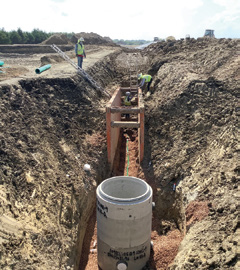 For Jones, the situation highlighted the difference between price and value. A lower bid may reduce costs at the beginning of a project, but reliability often determines what the project ultimately costs by the time it is complete. When delays occur, work must be redone, or contractors fail to honor their commitments, the financial impact can quickly eclipse any initial savings.
That reality is one of the reasons many developers who initially view K-CON as a higher-cost option eventually come to see the company differently. Over time, the conversation shifts away from who submitted the lowest number and toward who can be trusted to deliver results consistently.
Why Doing It Right Matters
For Jones, quality is not an abstract principle or a marketing slogan. It is a practical business decision rooted in years of experience and a deep understanding of how small issues can evolve into major problems when left unaddressed.
In utility construction, a minor imperfection that appears insignificant during installation can become far more complicated once communities have been built around the infrastructure beneath them.
That long-term perspective shapes the way K-CON approaches every project.
Rather than focusing solely on whether something will pass inspection today, Jones encourages his team to think about how that same decision will look years from now. If there is a concern, the preference is to address it immediately rather than risk creating a larger issue down the road.
“It might cost more to fix now,” Jones says, “but it's a whole lot less work and cost later.”
The philosophy reflects a broader belief that has guided the company from the beginning: short-term efficiency should never come at the expense of long-term reliability. While taking extra time to correct an issue may occasionally affect a project's immediate profitability, the alternative often carries consequences that are far more significant. Beyond the financial implications, there is also the matter of trust. Developers remember the contractors who stand behind their work, just as they remember those who disappear when challenges arise.
-
When developers encounter a problem, they don't have to navigate layers of management or wait for answers. They know they can call me directly, and the issue will be addressed decisively.
For K-CON, maintaining that trust requires a willingness to make decisions based on what is right rather than what is easiest. It includes investing additional effort, accepting responsibility, and approaching every project with the understanding that the company's reputation will be measured long after construction crews have left the site.
Growing Without Losing What Matters
As K-CON continues to expand, an important focus is ensuring growth without compromising the qualities that have driven its success. Today, the company generates approximately $34 million in annual revenue and employs more than 80 people, with plans to significantly increase both over the coming years. Opportunities for growth continue to emerge across the Dallas-Fort Worth region, and demand for experienced, reliable utility contractors remains strong.
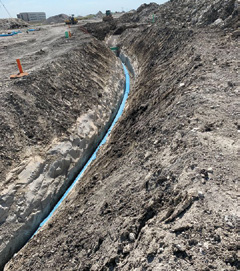 For many companies, that kind of momentum can create pressure to scale as quickly as possible, and in the process, quality suffers.
From the beginning, Jones has viewed growth as something that should be managed carefully. Building a larger company holds little value if it comes at the expense of the responsiveness, accountability, and craftsmanship that clients expect. As a result, K-CON's expansion strategy has focused as much on developing people as it has on acquiring new work.
That philosophy is evident throughout the organization. Instead of filling leadership roles with outside hires, the company places a strong emphasis on promoting from within. Employees who demonstrate commitment and capability are given opportunities to take on greater responsibility, supported by the training and guidance necessary to succeed.
The company's commitment to quality and accountability has also earned K-CON recognition as the Top Underground Utility Construction Solutions Provider for delivering reliable infrastructure projects. Jones sees it as validation of the standards that have guided the company since its founding.
As the company grows, its success will not be measured solely by the number of projects completed or the revenue generated, but by its ability to preserve the owner-level accountability that has produced the quality, trust, and repeat business that have formed the foundation of its reputation from the very beginning.
Choosing Underground Utility Construction That Keeps Projects Moving
Underground utility construction is often judged by price before it is judged by consequence. A lower bid can look attractive on a spreadsheet, yet the real cost appears when crews wait, lots remain unfinished, inspection dates slip and a developer loses control of the build sequence. In utility work, value is measured less by the number on bid day than by whether the contractor can finish the scope and correct issues quickly enough to protect the next phase. Executives assessing this field should look beyond capacity claims and ask how decisions are made when a problem emerges in the field. That question also extends to inspections, site access, weather windows and crew sequencing because each delay can compound across the larger development schedule.
The strongest providers tend to combine field fluency with direct accountability. Underground work leaves little room for handoffs between estimating teams and field crews, then again between supervisors and decision-makers. Delays grow when an owner has to move through layers of administration before receiving a practical answer. A better model places responsibility close to the work. The person answering the call should understand excavation, installation, cost effect and schedule pressure well enough to make a decision without turning the matter into a meeting.
This matters because underground utility construction does not fail only through poor workmanship. It also fails through slow response and unclear ownership, especially when an underpriced bid later becomes an unfinished obligation. A contractor that wins work by trimming too aggressively may leave the developer carrying the risk after the invoice is approved. The issue is not merely repair cost; it is schedule trust. Once a developer has to chase answers, the contractor has already shifted risk back to the buyer. The right partner protects continuity by pricing work with enough knowledge to stand behind it, then accepting responsibility when its own work needs correction. That discipline is especially valuable in residential development, where unfinished utility scopes can hold back homebuilding and delay closeout.
Experience inside the field should also be treated as a management asset, not merely a résumé detail. Leaders who have performed the work themselves are better positioned to estimate accurately, train crews, diagnose problems and judge when growth is starting to threaten service quality. They are also less likely to separate office decisions from field reality, which is where utility work often becomes expensive. A company that promotes from within can build a more consistent workforce, provided it supports advancement with real training. For buyers, that combination reduces the risk of crews being treated as interchangeable labor and helps preserve a shared standard across jobs.
K-CON fits this profile through a service model built around water-sewer site utilities and related storm water work for construction markets. Its strongest distinction is not a broad claim of scale, but owner-level responsibility tied directly to field knowledge. Developers deal with a decision-maker who can answer and act while absorbing the consequences when a fix is clearly connected to its work. In-house estimating supports cost control, while paced growth and a repeatbusiness reputation show discipline. For executives who value continuity over the cheapest bid, K-CON stands out as a disciplined choice for underground utility construction.
...Read more
Underground Utility Construction Solutions Info
Q1
What Are Underground Utility Construction Solutions?
Underground Utility Construction Solutions cover the planning, installation, relocation and support of buried infrastructure that keeps sites connected to essential services. This can include water, sewer, storm drainage, fire protection lines and related concrete structures. The work matters because it must be coordinated below the surface, where safety, sequencing, soil conditions and existing utilities affect every decision. Effective delivery also depends on communication between project managers, field crews and inspection teams.
Q2
How Does K-CON Support Underground Utility Construction Needs?
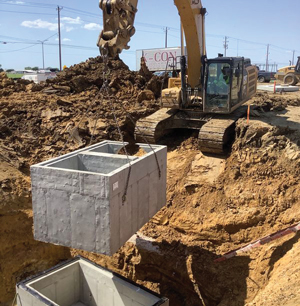
K-CON supports Underground Utility Construction Solutions through site utility work for water, sewer and storm water systems across construction markets. Serving the Dallas-Fort Worth Metroplex, it manages work lines that include water pipelines, sewer pipelines and manholes, storm drainage, fire lines and hydrants, and concrete storm structures. Its background also reaches residential, multifamily and commercial project environments, giving the company a practical base for utility scopes that must fit broader site development schedules.
Q3
What Should Buyers Look for in a Utility Construction Partner?
Buyers evaluating Underground Utility Construction Solutions should look for practical project management, careful coordination and a clear match between the contractor’s capabilities and the site’s infrastructure needs. Because underground work affects schedules, safety and future service reliability, the right partner should understand construction phasing, utility conflicts, local conditions and quality expectations before excavation or installation begins. That evaluation should include how clearly the team communicates scope, risk and sequencing.
Q4
Where Do Underground Utility Construction Solutions Create the Most Value?
Underground Utility Construction Solutions create value where buried systems must support growth without disrupting broader construction progress. On land development, subdivision, commercial or infrastructure projects, dependable utility installation can reduce rework, improve handoffs and support long-term service access. The category is especially important when water movement, drainage capacity, sewer performance or fire protection readiness must be built into the site from the start. Well-executed work can help future maintenance teams understand and manage the system more easily.
Q5
How Does K-CON’s Project Background Reflect Category Experience?
K-CON’s project background shows how Underground Utility Construction Solutions translate into field execution. Its listed work includes residential developments in Texas communities such as Melissa, Krum, Princeton, Hutchins, Lavon and Royse City, along with water line extensions, sewer projects, wet utilities work and concrete storm-related scopes. Several projects also show multimillion-dollar contract values, reflecting experience with sizeable development programs. That mix of locations and scopes shows familiarity with the recurring demands of North Texas site utility work.
Q6
Why Are Planning and Continuity Important in Utility Site Work?
Planning and continuity are central to Underground Utility Construction Solutions because buried infrastructure usually becomes difficult and expensive to correct after construction advances. Sound preparation helps align crews, drawings, materials, inspections and site access before work affects other trades. Continuity also supports dependable long-term performance, whether the system is moving water, carrying sewage, handling storm runoff or supporting fire protection infrastructure. For owners and builders, that discipline helps convert underground work from a hidden risk into a stable part of the project.
