
Thank you for Subscribing to Utilities Business Review Weekly Brief

US Water Services Corporation
Michael A. Miller, Senior Utility Manager
Sustaining Water Infrastructure through Workforce Investment
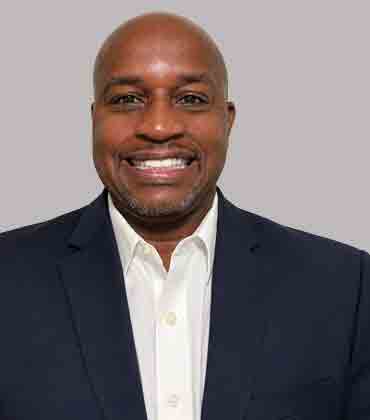
Michael A. Miller
The Workforce Gap behind Environmental Sustainability
When we talk about sustainability, we usually mean energy efficiency, green buildings, housing and responsible business. We rarely talk about people. Yet the framework many organizations use, the triple bottom line of people, planet and profit, puts people first. Every glass of safe drinking water and every gallon of treated wastewater depends on licensed operators, maintenance technicians and instrumentation specialists. Those professionals are retiring faster than they are being replaced. No utility can be adequate, healthy or resilient without them.
This is not a new warning. In the early 2000s, I asked the head of the Florida Department of Environmental Protection what the state intended to do about the impending shortage of operators, particularly wastewater. I considered his response a non-answer, even though FDEP's own licensing data showed the median Florida operator was nearly 50 years old by 2006. Two decades later, that shortage arrived.
The largest driver is the retirement of the Baby Boom generation, which built and staffed much of today's infrastructure. The American Water Works Association's 2026 State of the Water Industry report found that 21 percent of utility employees are eligible to retire within five years, and vacancy rates already averaged 9 percent. The US Bureau of Labor statistics projects about 10,000 operator openings a year through 2035, all to replace workers who retire or leave the field. Each departure takes decades of plant-specific knowledge with it.
Utilities also struggle with retention, losing trained staff to the private industry and other trades. Private contract operators and the municipalities they serve face the same shortfall. Pay has not kept pace with the licensing and roundthe-clock responsibilities these jobs demand. And many organizations, public and private, have no real succession plan, so experience walks out the door on retirement day. A workforce that is depleted without being replenished is, by definition, unsustainable.
At the same time, the work is becoming more challenging. Saltwater intrusion threatens Florida coastal well fields. PFAS, the so-called forever chemicals, now face federal drinking water limits that demand new monitoring and treatment. Agricultural runoff loads surface waters with nutrients that fuel algal blooms. Protecting these resources is environmental sustainability in practice, and each threat calls for more expertise from a shrinking workforce.
The Public Consequences of an Aging Workforce
Nowhere is the shortage more acute than in the wastewater field, where operator vacancies may be the hardest positions of all to fill. Wastewater treatment is typically more complex than drinking water treatment. It relies on living biology. Activated sludge, nitrification, denitrification and solids handling depend on microorganisms that react to every change in flow, temperature and toxic load. Discharge permits and Florida's push toward advanced nutrient removal and reuse leave little margin for error. Then there is the safety aspect related to confined spaces and hydrogen sulfide, which create hazardous conditions that can be fatal. Such work environments make recruiting competent candidates increasingly more difficult.
The consequences of failure go far beyond the water treatment plant. When a water system goes down, constituents lose safe drinking water and basic sanitation at home. Hydrant pressure drops, leaving firefighters without the water they need. Hospitals, schools and industries that depend on a reliable supply must curtail, shut down operations or implement alternative resources with economic losses across the community.
Conversely, wastewater system failures result in untreated sewage, which carries pathogens like E coli, norovirus and hepatitis A, and sanitary sewer overflows (SSO) in homes, streets and waterways. The remediation of sewage and available alternatives to in-house treatment are costly and often impractical. Hauling sewage by tanker is expensive at any scale, and diverting flow to a neighboring utility works only where interconnections and interlocal agreements already exist. Many communities have neither. In a failure, social, environmental and economic sustainability collapse together.
Maintenance and instrumentation staff are just as critical. When maintenance staffing falls short, preventive work is the first casualty. Crews shift to emergency responses, reliability declines and costs climb, because emergency repairs and early replacement always cost more than routine preventive care.
Instrumentation and Control (I & C) technicians deserve special focus. Growing reliance on reverse osmosis (RO), along with automated and AI-assisted process control, depends on sensors, analyzers and control systems that only trained I&C staff can calibrate and troubleshoot. Training must be continuous, funded and built into the job.
Turning Workforce Challenges into an Opportunity
For private operators, this is also an opportunity. Aging municipal plants and a growing fleet of RO systems need specialized care. A company that develops its own cadre of maintenance and I&C professionals strengthens succession planning and can offer those skills as a new service line and revenue stream.
Building a Sustainable Workforce for the Future
Building a sustainable workforce requires the same longterm planning we apply to pipes, plants and energy. It starts with recognition and funding. Government and industry must treat the workforce shortage as a threat to public health and infrastructure and fund workforce development accordingly. It continues in the classroom. Middle and high schools can integrate water and wastewater topics into the science curriculum. Utilities can host regular facility tours, and students can earn credit towards graduation through school projects and supervised work at local water and wastewater treatment facilities.
Every glass of safe drinking water and every gallon of treated wastewater depends on licensed operators, maintenance technicians and instrumentation specialists.
Compensation must also be reevaluated so that salaries, wages and benefits reflect the licensing, responsibility and on-call demands of these roles. Paid apprenticeships and internships let newcomers earn while they learn and give veterans a formal way to pass on what they know. Finally, every utility and contract operator needs a succession plan that identifies critical roles, who is nearing retirement in said roles, and who will be ready to step in.
In the end, sustainability starts with people. We tend to measure it in kilowatt hours saved, building certifications and emissions cut, but often overlook the people who make every system work. A utility that cannot staff its plants, maintain its assets or pass knowledge to the next generation is not sustainable, regardless of the efficiency of systems and equipment. The warning I raised 20 years ago went unanswered. Investing in this workforce now is how we sustain safe, resilient water and wastewater service for the generations that follow.
The articles from these contributors are based on their personal expertise and viewpoints, and do not necessarily reflect the opinions of their employers or affiliated organizations.
