


Thank you for Subscribing to Utilities Business Review Weekly Brief


The power-delivery landscape in the U.S. is undergoing rapid change as the domestic economy electrifies. Over the last five years, unprecedented energy demand has occurred due to technological advances, population growth and migration, onshoring of manufacturing, electric vehicles, and, most recently, data center installations. Factors like aging infrastructure and increasing climate events are reshaping expectations for modern, resilient power delivery, driving the development of electric infrastructure—from generation to delivery—in new ways. Given the urgency of moving fast to ensure resilient, affordable power, demand for solutions is often greater than the supply of resources. Energy providers need a partner that can support the full lifecycle of infrastructure and work alongside them in this new era.
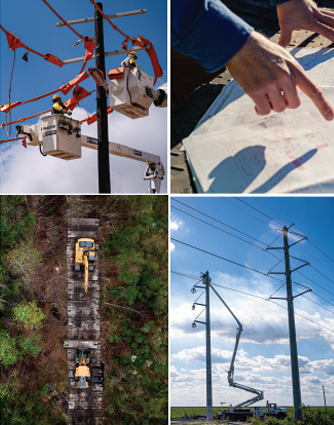 Pike Corporation has evolved its approach in this direction. Grounded in a customer-first philosophy, Pike serves as a comprehensive partner for the energy infrastructure sector. As an end-to-end solutions provider, it delivers planning, engineering, construction, maintenance, and storm response services that enable energy companies to strengthen and expand their infrastructure with confidence. With more than 80 years of experience and relationships with several customers lasting more than five decades, Pike has earned a strong reputation for reliability, integrity, and quality.
“Success at Pike is defined by the trust our customers have in us to be a constant partner, from strategy to execution and beyond. We earn that trust through our solutions-driven mindset, a proven commitment to safety and quality, and alignment with our customers’ vision at every stage of the journey,” says Will Pike, chief commercial officer.
A Unified End-to-End Model That Delivers
Pike’s philosophy is supported by an integrated service model that spans the full lifecycle of energy infrastructure. It supports customers in early-stage planning, conceptual design and engineering, right-of-way acquisition, civil construction, vegetation management, and the full scope of transmission, distribution, and substation construction. Pike also provides maintenance and storm response services that help sustain and protect assets long after initial delivery.
This comprehensive model provides customers with a single point of coordination across programs. Delivering all key services through a single, aligned family of companies enables clear communication, consistent standards, seamless scheduling, and greater efficiency across execution. Technology also plays an increasing role in delivery. Pike incorporates digital tools and field technologies to enhance visibility, strengthen data accuracy, and support safe, efficient operations.
-
Success at Pike is defined by the trust our customers have in us to be a constant partner, from strategy to execution and beyond. We earn that trust through our solutions-driven mindset, a proven commitment to safety and quality, and alignment with our customers’ vision at every stage of the journey.
A Customer First Approach to Partnership
For Pike, customer centricity guides how it engages, collaborates, and delivers results. Its customers are responsible for planning long-term investments, maintaining service to homes and businesses, and strengthening the resilience of the communities they serve. Pike supports these priorities by aligning with each customer’s goals and operating environment, offering solutions that complement their teams and reinforce their ability to execute. By sharing ownership of outcomes rather than providing isolated services, it builds relationships based on clarity, accountability, and performance.
Pike’s core values are the foundation of every project and relationship. Safety is central to every activity, protecting employees, customers, and communities. Integrity guides how Pike fosters relationships, fulfills commitments, and maintains trust with customers and stakeholders. A solutions mindset drives the company to adapt its services to customer needs rather than take a uniform approach while maintaining industry-leading quality of work. Pike views each project as a unique opportunity to partner with its customers to develop the right solution for their specific project.
Preparing for the Grid of Tomorrow
As its customers across the country are preparing to launch significant investment programs, Pike is focused on building the talent and capabilities needed to support this next era of infrastructure development. The company is investing heavily in attracting and developing employees, providing best-in-class training and building long-term career paths. These investments enable Pike to be an employer of choice in the industry and deliver the scale, quality, and consistency that customers require as demand for energy-grid upgrades escalates with the generational shift toward an electrified economy. For more than 80 years, Pike has met the needs of an ever-changing industry. With a proven ability to partner with its customers to deliver solutions, quality, and value, Pike continues to position itself as the end-to-end partner for its customers’ most critical infrastructure projects.
Turnkey Infrastructure Solutions Info
Q1
What Do Turnkey Infrastructure Solutions Include for Energy Utilities?
Turnkey Infrastructure Solutions bring planning, engineering, construction, maintenance and emergency support into a coordinated delivery model. For energy utilities, that means fewer handoffs across complex grid programs and clearer accountability from early concept through long-term asset care. In power delivery, the category often covers transmission, distribution, substations, civil work, vegetation management and storm restoration. The value is not only convenience; it is the ability to align technical design, field execution, safety practices and scheduling under one operating framework.
Q2
How Does Pike Corporation Support Turnkey Infrastructure Solutions?
Pike Corporation supports Turnkey Infrastructure Solutions through an end-to-end model for energy infrastructure. Its work spans planning, conceptual design, engineering, right-of-way acquisition, civil construction, vegetation management, transmission and distribution construction, substation work, maintenance and storm response. With more than 80 years in the sector and customer relationships extending beyond five decades, it brings continuity to programs that require long-term coordination. Pike also uses digital tools and field technologies to improve visibility, data accuracy and safe field operations.
Q3
Why Are Integrated Infrastructure Services Important for Grid Modernization?
Grid modernization depends on synchronized decisions across design, permitting, construction and operations. Turnkey Infrastructure Solutions help utilities avoid fragmented execution when demand is rising from electrification, population shifts, manufacturing growth, electric vehicles and data centers. An integrated partner can connect field realities with engineering priorities, helping projects move from investment planning to reliable delivery. This structure is especially useful when aging assets and more frequent climate events require utilities to improve resilience while maintaining affordable, dependable service.
Q4
What Should Utilities Evaluate in an Infrastructure Delivery Partner?
Utilities should evaluate whether a provider can coordinate the full lifecycle of work, not simply complete isolated tasks. Strong Turnkey Infrastructure Solutions require safety discipline, engineering depth, construction capacity, maintenance readiness, storm response capability and transparent communication. Buyers should also look for consistency across crews, practical technology use, and the ability to adapt services to a utility’s operating environment. The best fit is usually a partner that shares ownership of outcomes and can support both immediate execution and future system needs.
Q5
How Do Turnkey Models Improve Project Accountability?
Turnkey models improve accountability by assigning responsibility across multiple phases to one coordinated team. In Turnkey Infrastructure Solutions, planning assumptions, engineering choices, construction schedules and maintenance considerations can be reviewed together rather than treated as disconnected workstreams. This makes it easier to identify risks early, reduce rework, preserve quality standards and keep stakeholders aligned. For utilities managing large capital programs, that continuity can support safer execution, better documentation and a clearer path from strategy to completed infrastructure.
Q6
Where Do Turnkey Infrastructure Solutions Create Long-Term Value?
Turnkey Infrastructure Solutions create long-term value when they help utilities strengthen assets, respond to disruption and prepare for future demand. The benefits extend beyond project completion because maintenance, storm recovery, workforce readiness and data visibility all affect system performance over time. In energy infrastructure, a lifecycle approach can help organizations prioritize resilience, manage scarce resources and maintain service to the communities they support. The strongest outcomes come when delivery partners combine technical scope with disciplined execution and ongoing operational support.
