
Thank you for Subscribing to Utilities Business Review Weekly Brief

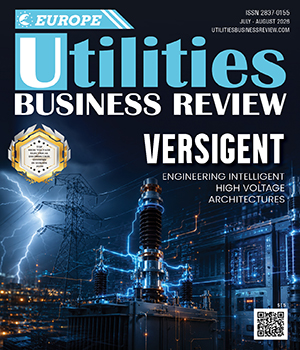
Versigent has been recognized by Utilities Business Review Magazine as the exclusive recipient of “Top High Voltage Electrical Distribution Systems in Europe 2026,” based on our proprietary methodology, reflecting its position in the industry, and is also named among “,” reflecting its broader leadership. This profile has been developed by the Utilities Business Review research and editorial team based on insights from an interview with Joseph T. Liotine, CEO.

Versigent
Engineering Intelligent High Voltage Architectures

Electrified mobility has transformed electrical distribution into one of the defining engineering challenges in vehicle development. Higher voltages, tighter packaging requirements and rising expectations around safety require every component to function reliably throughout a vehicle's lifecycle. Manufacturers must balance efficient power transfer, reduced weight and production feasibility while preparing platforms for increasingly sophisticated electric drivetrains. Those challenges have shifted electrical architecture from a supporting function to a critical engineering discipline.
Versigent approaches these demands through advanced high-voltage electrical distribution systems developed for battery electric and hybrid vehicles. Built on decades of experience in electrical architecture, its designs balance efficient power delivery with the safety, durability and reliability required for demanding vehicle applications. Supporting systems up to 1000 volts, its portfolio combines lightweight construction with thermal management and electromagnetic compatibility to help manufacturers meet increasingly complex design requirements.
Its engineering philosophy centers on designing complete architectures instead of isolated components. That perspective allows every harness, cable assembly and interconnection to contribute to a coordinated system capable of supporting demanding vehicle environments. Rather than treating these elements as individual products, it engineers them as part of an integrated electrical architecture where power delivery, thermal performance and packaging considerations are addressed together from the earliest design stages. This system-level perspective enables complex electrical networks to transition more efficiently from development into production.
Engineering High Voltage Systems for Modern Vehicle Platforms
Electric vehicle platforms leave little room for compromise in high-voltage system design. Harnesses must carry power safely between batteries, charging systems and critical vehicle functions without exceeding the space available within constrained vehicle layouts. Every design decision, from cable routing to thermal management, influences long-term reliability, packaging efficiency and overall vehicle performance.
Versigent addresses those demands through a portfolio of high voltage wire harnesses, cable assemblies, flexible flat cable technology and printed circuit integration. These technologies give manufacturers greater flexibility to package electrical systems within increasingly compact vehicle designs without compromising thermal performance or electrical capability. It's published guidance on emerging 800-volt architectures reflects the same system-level thinking, examining charging performance, thermal behavior and system integration as interconnected design considerations.
That design philosophy extends into product development. High voltage wire harnesses and cable assemblies move through a structured validation process that evaluates electrical performance, thermal behavior, electromagnetic compatibility and durability before designs advance toward production. This disciplined approach helps manufacturers adopt new electrical architectures with greater confidence.
Published case studies show how this design approach translates into measurable results. By refining cable routing and material selection within a high-voltage distribution system, Versigent reduced system weight by 15 percent. Those same changes improved assembly efficiency and lowered the total cost of ownership, illustrating how thoughtful design decisions can deliver benefits throughout manufacturing and vehicle performance.
Purposeful Design Supported by Manufacturing Excellence
That continuity becomes especially important once a vehicle program enters production. A well-designed electrical architecture succeeds only if it can be reproduced consistently at scale. Manufacturers cannot afford design revisions after production begins, making repeatability just as critical as technical performance. Every decision made during development must translate reliably to the factory floor.
Versigent accounts for those realities from the beginning of the design process. Manufacturing requirements are considered alongside electrical performance, allowing architecture design, validation and production planning to progress together. That approach helps reduce variation before production begins and supports efficient manufacturing across multiple facilities.
Its manufacturing network reinforces that development model. Engineering centers across four continents and manufacturing operations in more than 30 countries allow it to support regional production without sacrificing common engineering standards. Shared development practices and automated manufacturing processes help deliver consistent quality and give customers the flexibility to produce closer to their target markets.
Sustainability Through Material Innovation and System Optimization
Material choices have become part of the engineering conversation rather than a discussion reserved for environmental reporting. Electrical distribution systems still depend on copper for reliable power transfer, yet manufacturers are also expected to reduce the carbon footprint associated with vehicle production without compromising performance.
Versigent addresses that balance through Eco-Core recycled copper technology for its high voltage harnesses. Recycled copper offers electrical performance comparable to mined copper and can reduce carbon emissions associated with each harness by as much as 72 percent. That allows manufacturers to lower the environmental impact of their electrical systems without redesigning existing architectures or changing validation requirements. Material selection is only one part of the equation. Harness weight, cable routing and packaging all influence vehicle efficiency, making every design decision part of a larger engineering tradeoff. Treating those factors as connected rather than independent considerations, Versigent develops electrical distribution systems that support both performance targets and sustainability goals over the life of the vehicle.
Global Partnerships Built on Integrated Engineering
Vehicle electrical architectures are rarely developed in isolation. Decisions around power distribution, packaging and manufacturability are closely connected, making early collaboration between manufacturers and suppliers an important part of the development process. Contributing during the design phase allows potential integration issues to be addressed before they carry into production, reducing revisions later in the program.
Versigent supports that model through comprehensive electrical architecture capabilities spanning design, engineering and manufacturing. Its portfolio includes advanced signal, power and data distribution technologies that address current and future vehicle requirements. This breadth allows customers to coordinate multiple electrical functions within a unified development framework spanning concept through production.
Its relationships with original equipment manufacturers have been built over more than a century of collaboration across the automotive industry. That history has shaped an engineering approach grounded in practical experience and strengthened through ongoing investment in electrical architecture. Long-term customer partnerships and sustained technology development allow it to support vehicle programs across automotive and commercial vehicle markets.
Versigent distinguishes itself by uniting intelligent electrical architecture, rigorous validation and production readiness within a single development model. From lightweight high voltage systems and integrated design methodologies to sustainable material innovation and globally scalable execution, it enables manufacturers to convert complex electrical requirements into manufacturable systems prepared for global deployment.
Its ability to connect architecture design, manufacturing discipline and material innovation reflects an approach shaped by the practical demands of vehicle electrification. Rather than focusing on individual components, it develops electrical distribution systems that carry engineering intent from concept through production. That consistent approach has earned Versigent recognition as the Top High Voltage Electrical Distribution Systems in Europe 2026, acknowledging its contribution to advancing reliable and intelligent electrical distribution for next-generation vehicles.
