Thank you for Subscribing to Utilities Business Review Weekly Brief
Utilities Business Review: Specials Magazine

K-CON
Where Accountability Meets Underground Infrastructure Excellence
In residential development, profitability is determined by factors that extend far beyond the initial contract price. Builders and developers operate within tight schedules, manage significant financing costs, and coordinate countless moving parts to keep projects advancing. When one contractor fails to deliver, the resulting delays can ripple across an entire development, increasing costs and jeopardizing timelines. For that reason, many developers have come to recognize that the true value of a contractor is not measured solely by the price of a bid, but by the reliability, responsiveness, and accountability that contractor brings to the project. A partner who resolves problems quickly, stands behind their work, and keeps projects moving forward can save far more than a lower-cost alternative that fails to deliver. That reality has shaped the reputation of K-CON throughout the Dallas-Fort Worth Metroplex. Specializing in water, sewer, and storm drainage infrastructure, the company has built its business largely through repeat clients and referrals. For Owner Evan Jones, the reason is straightforward. “We're more worried about quality than quantity,” he says. Rather than focusing on securing the greatest number of projects, K-CON has built its reputation around helping developers avoid costly delays, minimize risk, and maintain momentum throughout the construction process. By remaining personally accountable for every project and standing behind its work long after installation is complete, the company has become a trusted partner for builders who understand that doing a job right the first time often proves to be the most cost-effective decision in the long run.

Electric Transmission and Distribution
Marmon Utility
Engineering More Capacity into the Grid Without Adding More Land
Ken Woo, President, Alan Tse, VP Product Management and Strategic Marketing; Michael Lemelin, VP of Engineering; Christian Ouimet, VP of Sales
What pressures are utilities facing while modernizing electrical infrastructure and expanding grid capacity today? Electric utilities are under increasing pressure to modernize aging infrastructure, support growing electrification driven by data centers and electric vehicles and operate within tighter land-use, operational and regulatory constraints. In this environment, products alone are not enough. Utilities need partners who engage early, stay through execution and remain accountable across the full life of the system. That is how Marmon Utility—a long-trusted expert in engineered overhead and underground power distribution solutions—positions itself. The company operates as an extension of the utility, engaging early in system design and planning, working closely with specification teams and supporting engineering, site-level execution and installation. Its involvement does not end at delivery. Post-installation support ensures systems perform as intended long after most suppliers have moved on. How does spacer cable technology improve electrical infrastructure capacity within constrained utility corridors? The impact becomes clear in the numbers. Its 138 kV Aerial Spacer Cable System has an eight-foot-wide footprint, compared to a 30-foot-wide footprint for a traditional bare-wire system at the same voltage. In congested corridors, that difference can determine whether a project proceeds or stalls. Utilities can run multiple circuits on existing pole structures and rights-of-way—without acquiring new land or rebuilding from scratch. “One of the challenges for infrastructure in the U.S. is that there is not enough land to build more,” says Ken Woo, president. “Our solution allows utilities to maximize the use of their existing rights-of-way.” Built to Last, Designed to Evolve Why is field-driven engineering important when designing utility infrastructure products for long-term use? Hendrix Spacer Cable Systems has been on the market for more than 75 years, while sister brand Kerite has supported critical infrastructure for over 170 years. Marmon Utility draws on both legacies and that depth of experience shapes how it delivers value to customers at every stage. “Our experienced linemen, many with 30-plus years in the field, are part of the product development process,” says Michael Lemelin, Vice President of Engineering. “They know what crews will adopt, what they will trust and what will sit unused because no one wants to work with it in the field.” That field-driven insight is reflected in the forthcoming Vise-Top Line Post insulator, which extends the proven benefits of the Vise-Top pin insulator into a line post configuration. The result is lower labor costs, improved installation consistency and a reduced experience threshold for line crews—an important advantage as the industry faces a shortage of skilled labor. Material science follows a similar path. Flame-retardant insulators address durability requirements that have evolved significantly in recent years, while many products are recyclable, supporting the sustainability commitments utilities increasingly face from regulators and the public. Active participation in industry committees across both distribution and transmission keeps Marmon Utility aligned with emerging standards before they become requirements. What a Culture of Continuous Improvement Delivers In what way does lean manufacturing support reliability and delivery consistency for utility customers? At Marmon Utility, continuous improvement—rooted in lean manufacturing—translates directly into what utility customers value most: consistent output, reliable delivery and greater planning confidence. Every employee is trained in lean principles from the start and a dedicated lean engineer supports every facility. The company’s internal belt system reflects the depth of that commitment, with employees progressing through yellow and green belts and ultimately to blue belt—the highest level within Marmon companies, surpassing black belt certification. Standardized processes drive consistency across manufacturing, enabling dependable delivery and repeatable field performance.
Wastewater Treatment

Clean water is often the result of thousands of decisions made long before it reaches a customer's tap. From selecting the right treatment program and maintaining regulatory compliance to managing distribution systems and responding to operational issues, those decisions play a critical role in ensuring water quality and system performance. As utilities navigate increasingly demanding responsibilities, they often require more than treatment products alone can provide. They need trusted partners that can help them address operational challenges, maintain compliance and make informed decisions. Helping customers navigate those responsibilities definesWaterWise Enterprises. Built on three generations of industry experience, the company helps municipalities and rural water districts manage the realities of water treatment through specialized phosphate programs, water and wastewater chemicals, laboratory testing, consulting services and contract operator support. Since its establishment in 2001, WaterWise has expanded its role beyond supplying treatment solutions, working closely with customers to address technical, operational and compliance-related challenges across Kansas, Oklahoma and Missouri. The company's commitment to supporting customers throughout the entire water treatment process has earned industry recognition, including being named a Top Water Treatment Chemicals and Solutions. "We always want to make sure the water is safe first and foremost. Then we focus on helping customers meet regulatory requirements and address the operational issues that affect system performance," says Jenelle Summerow, owner.
Utilities Construction

Navigating Complexity in Gas Utility Construction, Strengthening Risk Mitigation
Awet Haddis, Senior Project Manager, Puget Sound Energy
Turbine

Building Equitable Pathways in Western Energy
Pamela Sporborg, Director, Transmission & Markets, Portland General Electric [NYSE: POR]
Manufacturer Representative
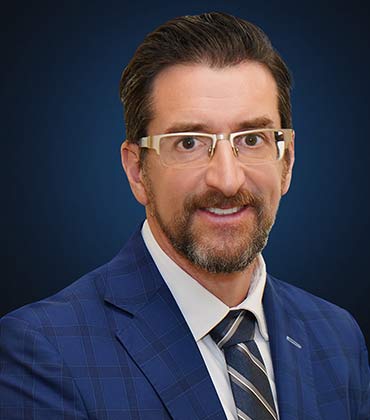
Meeting the Moment: Reliability, Risk and Resilience in a Demand-Driven Energy Future
Michael Caravaggio, Vice President, Energy Supply, Reliability, EPRI
Utility Workforce Development

Geospatial-First Utilities: Building the Baseline for Smarter Operations
Jon Leist, Geospatial Program Director for Energy & Utilities, Woolpert Inc.
Gas Utility Suppliers

Operational Leadership vs Field Leadership in the Utility Construction Business
Jarvis Lopez, Regional Safety Manager- Mastec Power Delivery East, Henkels & McCoy
Gas Utility Suppliers

Building Digital Discipline in the Power Sector
Dalen Copeland, CIO, EDF Power Solutions North America
Emergency Management
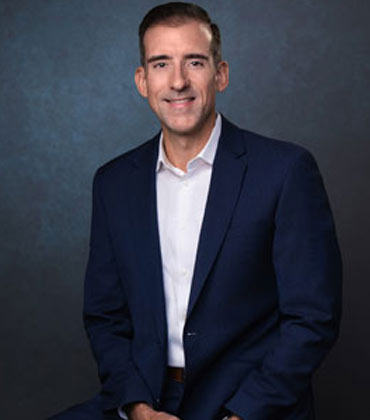
Practical Lessons in Engineering Leadership
Timothy Rozic, Engineering Manager, PSB Industries
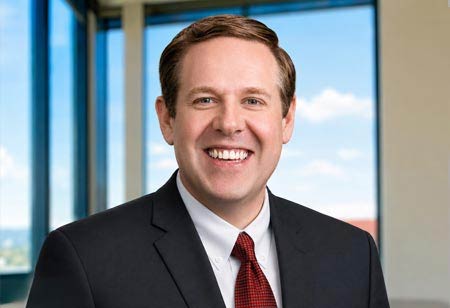
IN MY OPINION
Gas Utility Suppliers
Strengthening Organizations Through Transparent Leadership
Christopher Forbeck, Director of Total Rewards, NorthWestern Energy

LAST WORD
Gas Utility Suppliers
Hands-On Training for Real-World Utility Operations
Mike Ritz, Operations Training Manager, Chesapeake Utilities Corporation
IN FOCUS

Cloud-Based Smart Metering Solutions Modernizing Utility Management
Cloud-based smart metering solutions improve utility monitoring, operational efficiency, billing accuracy, sustainability, and real-time energy management capabilities.

Water Softening: A Key to Improved Quality and Cost Savings
Water softening products enhance water quality for daily use, reduce maintenance costs, and help extend the lifespan of household appliances.
EDITORIAL
Building Resilience into the Modern Utility Network
Utilities are facing a defining period of change as aging infrastructure, growing electrification, workforce transitions and rising reliability expectations reshape investment priorities throughout the sector. This edition of Utilities Business Review analyzes how utility organizations are responding through grid modernization, workforce development and operational strategies designed to strengthen resiliency and deliver long-term value.
Our cover story features K-CON, recognized as the Top Underground Utility Construction Solutions 2026. Specializing in water, sewer and storm drainage infrastructure, the company has built its reputation on responsiveness, quality and owner-level accountability. Under the leadership of Evan Jones and the management team, K-CON has distinguished itself by helping developers avoid costly delays, resolve challenges quickly and maintain project momentum.
The company of the year, Hendrix® by Marmon Utility, has been awarded the Spacer Cables and Insulators of the Year 2026 for its role in helping utilities expand grid capacity within increasingly limited environments. In light of rising consumer demand for electricity, particularly from data centers and electric cars, coupled with landuse and policy issues, Marmon Utility’s engineered systems help utility companies use their existing infrastructure more efficiently and improve reliability.
This issue also highlights the people and practices shaping the future of utility operations. Mike Ritz, Operations Training Manager at Chesapeake Utilities Corporation, examines how practical, safetyfocused training and close collaboration between training teams and field operations are essential to maintaining workforce readiness in an increasingly complex environment.
Christopher Forbeck, Director of Total Rewards at NorthWestern Energy, explores how transparent leadership, clear career pathways and AI-enabled employee support tools can strengthen trust, improve engagement and align workforce strategies with long-term business goals.
As utilities move into the future, success will depend equally on technology, people, and processes. We urge our readers to ponder these observations and reflect on how these issues will impact the future of the utility industry.
