Thank you for Subscribing to Utilities Business Review Weekly Brief
Utilities Business Review: Specials Magazine
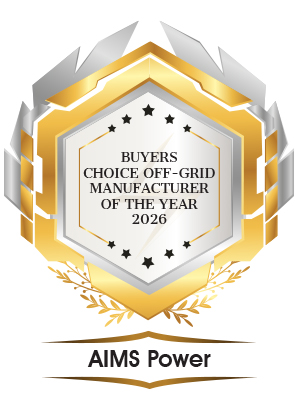
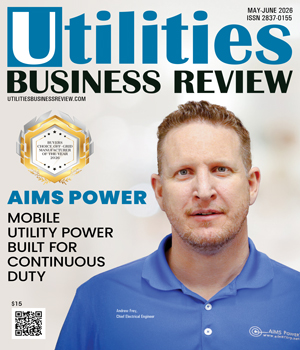
Why are field-based industries demanding continuous-duty mobile electricity beyond traditional infrastructure? As service industries expand into field-based operations, the demand for utility-grade electricity extends beyond traditional infrastructure. From HVAC repair and utility maintenance to mobile diagnostics and food service, equipment that once depended on permanent utility connections must operate under continuous-duty conditions. This shift is redefining electrical engineering standards, requiring systems designed for sustained loads, high inrush currents and industrial-grade performance. AIMS Power engineers systems specifically for this evolving requirement. It began with low-frequency inverter chargers designed to start heavy motors and sustain continuous-duty operations. That foundation has evolved into a broader ecosystem that includes pure sine inverters, inverter-only platforms aligned with high-output alternator systems, all-in-one generator-replacement units that integrate batteries and solar input, and complementary DC-to-DC and MPPT charging solutions. Configurations span 12V, 24V and 48V platforms, with split-phase 120/240V and three-phase options and selectable 50Hz or 60Hz frequency for domestic and international deployment. Alongside established low-frequency inverter charger systems, engineering teams are advancing high-frequency inverter designs that reduce size and weight while maintaining heavy-load capability. “We listen to how customers use power in the field and engineer customized systems to match those conditions,” says Andrew Frey, chief electrical engineer.
Top Wastewater Design and Engineering Services 2026
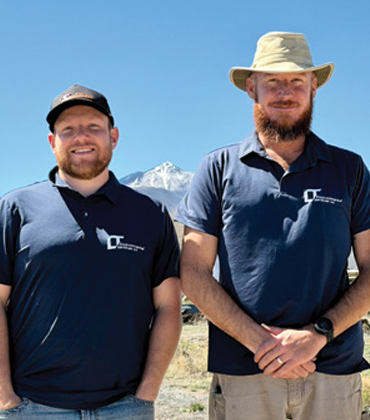
Site limitations, regulatory timelines, and environmental considerations increasingly constrain wastewater system design. Organizations must balance land availability, permitting delays, and treatment effectiveness while ensuring long-term sustainability. LT Environmental addresses this challenge by grounding its design approach in detailed geological and site analysis. Its methodology begins with understanding how soils and subsurface conditions behave, allowing systems to be tailored to each location. “My most important concern is protecting the aquifer,” says Layne Tucker, president. Grounding Design in Site and Soil Analysis A core challenge in wastewater engineering is determining how a system will interact with the surrounding environment. Soil composition, slope, drainage patterns and aquifer depth influence system performance and safety. LT Environmental integrates these factors into the earliest stages of design. Surface features such as slope and drainage are evaluated alongside subsurface soil horizons to determine absorption potential and system sizing. This allows the company to identify optimal system locations and configurations before construction begins. By combining geological insight with engineering design, LT Environmental creates systems that balance treatment effectiveness, environmental protection and cost considerations. This approach ensures that each solution is aligned with both site conditions and regulatory expectations.
Dams Leak Detection Service Of The Year 2026

What challenges do engineers face in assessing seepage behavior in water-retention structures? All water-retention structures exhibit seepage as a function of hydraulic loading, material permeability, and foundation conditions. From an engineering standpoint, the governing question is not whether seepage is present, but whether subsurface flow behavior remains consistent with design assumptions and within defined safety thresholds. Effective risk management therefore depends on resolving seepage origin, connectivity and migration pathways with sufficient confidence to support operational and mitigation decisions. Willowstick provides high-resolution, non-invasive seepage intelligence for dams, levees and tailings storage facilities by directly characterizing subsurface flow behavior rather than inferring conditions from surface indicators alone. While most structures are designed to tolerate controlled seepage through drains, filters and foundations, uncertainty increases as assets age, hydraulic regimes change or subsurface conditions deviate from original design assumptions. Willowstick reduces this uncertainty by mapping active flow paths within the embankment, abutments and foundation materials. Across the 62,000+ global large dam inventory, a measurable percentage of large structures are rated in unsatisfactory condition with high risk of major loss of life and economic damage and recent failures, including tailings facilities, have underscored the consequences of unresolved seepage mechanisms. For owners and engineers, the critical input is whether seepage behavior is stable, progressive or trending toward defined performance or safety limits, even when surface conditions appear unchanged. Willowstick supports this assessment by resolving subsurface dynamics that are otherwise unobservable using conventional monitoring alone. Traditional instrumentation, such as piezometers, seepage weirs and visual inspections, can confirm the presence and magnitude of seepage, but often provides limited insight into flow-path geometry, hydraulic connectivity or causality. This can force decision-makers into either conservative, high-cost mitigation or continued monitoring with unresolved risk. Willowstick fills this gap by supplying spatially resolved, model-based interpretation of seepage pathways that directly informs engineering judgment.
CXO INSIGHTS

Maintenance in the 21st Century: The Importance of CMMS and Asset Management in the New Age of Wastewater Operations
Charles Heino, Vice President of Operations, EOM

Strategic Initiatives for a Cleaner Energy Future
Ivon Louis-Letang, Energy Manager, Eversource Energy

Pacing Along the Energy Evolution
Julian Kaufmann, Chief Commercial Officer, CAMS
Championing Strategic Leadership in Water and Forest Sustainability
Elvy Barton, Water and Forest Sustainability Senior Manager, Salt River Project

Fulfilling Regulatory Compliance with Technology
Brett Adamcik, System Integrity and Reliability Director, CenterPoint Energy [NYSE: CNP]
IN FOCUS

Empowering Transformer Longevity with Strategic Maintenance Approaches
Effective transformer maintenance supports operational safety, asset longevity, and regulatory compliance, enabling robust infrastructure management.
Unlocking the Potential of Off-Grid Manufacturing Solutions
Off-grid manufacturing provides energy independence, cost savings, and sustainability while offering long-term benefits for manufacturers.
EDITORIAL
Engineering the Future of Distributed Power
The utilities sector has been undergoing a sustained structural transition, now accelerating toward decentralized energy systems, higher reliability expectations, and data-driven operational control. This edition of Utilities Business Review explores how organizations are adapting through resilient power architectures, advanced analytics and efficiency-driven innovation.
Our cover story, AIMS Power, recognized as the Buyer’s Choice OffGrid Manufacturer of the Year 2026, addresses the growing demand for continuous-duty power beyond traditional grid infrastructure. The company engineers mobile and off-grid power systems designed around real-world load behavior, enabling sustained operation across service vehicles, remote sites and industrial applications. Its integrated approach, combining inverter technology, lithium-based storage and solar capability, replaces generator dependency with stable, scalable electrical systems. Awarded for the Dams Leak Detection Service of the Year 2026, Willowstick Technologies has established a distinct position in seepage intelligence for dams, levees and tailings storage facilities. Led by Scott Osterman, the company delivers high-resolution subsurface diagnostics that help engineers and asset owners identify seepage origin, connectivity and migration pathways with greater precision.
Across the broader utilities landscape, the focus is shifting toward precision, efficiency and long-term system resilience. Advances in inspection technologies, remote monitoring and data analytics are enabling more accurate risk assessment and proactive maintenance, strengthening infrastructure reliability while supporting regulatory compliance. At the same time, the push toward electrification and energy-efficient systems is accelerating the adoption of technologies such as heat pumps, advanced refrigeration and emerging solutions that reduce overall grid demand while aligning with evolving environmental requirements.
In our CXO insights, Brett Adamcik, System Integrity and Reliability Director at CenterPoint Energy, emphasizes the role of high-quality data, advanced inspection tools and cross-industry collaboration in improving safety and regulatory outcomes. Ivon Louis-Letang, Energy Manager at Eversource Energy, highlights the importance of incentivizing emerging technologies and continuously adapting to evolving standards to drive measurable energy savings and support electrification efforts.
As utilities evolve toward more distributed and intelligent systems, the ability to align engineering, data and efficiency strategies will define longterm performance. We invite you to explore this issue and engage with the innovations shaping the future of energy delivery.
