

Thank you for Subscribing to Utilities Business Review Weekly Brief
Utilities Business Review: Specials Magazine
The electric grid demands infrastructure capable of carrying greater loads while remaining dependable across changing terrain, aging systems and increasingly complex project requirements. MYR Group Inc. has spent more than 130 years working within that environment, developing specialized capabilities across transmission, distribution, substations, energized construction and clean energy. Its experience spans projects from 69kV to 765kV, supported by extensive equipment resources and a workforce structured to handle projects of varied scale and complexity. Its transmission and distribution capabilities sit within a broader network of 13 electrical contracting companies. The structure gives projects access to local management while allowing MYR Group to draw on equipment, labor and specialized expertise across its network. That combination supports customized project execution without separating field knowledge from the resources available across the wider organization. Its transmission teams work across different structures, foundations, voltages and terrains, covering new construction as well as upgrades to existing infrastructure. It also has developed capabilities in energized services and high-voltage direct current installations, expanding the range of work it can undertake for utilities and other infrastructure owners. Distribution work follows a similarly broad model. MYR Group subsidiaries have constructed and maintained thousands of miles of overhead and underground distribution infrastructure, covering new development, repairs and system hardening. Long-term agreements with utilities have also created a framework for recurring construction and maintenance work rather than isolated project engagements.

Gas Turbine Replacement Parts Company of the Year 2026
In the world of gas turbines, change rarely announces itself loudly. It builds gradually within power plants, procurement cycles, and the long maintenance schedules that keep electrical grids running. At the same time, OEMs, focused on high-margin new-build projects, have shifted their attention toward new installations while global electricity demand continues to surge, driven by data centers, electrification, and industrial growth. The result is a system in which existing turbines operate longer, harder, and with fewer OEM resources available to support them. UNEW operates in the space between what is already installed and what is newly sold. Its role is not to replace OEMs but to extend the life of the infrastructure that already powers cities and industries. In many ways, the company has become part of the foundation that keeps the modern world running. UNEW, Inc. is over 25 years old and services clients in over 30 countries across the global gas turbine industry. As Mark Dender, President of UNEW, explains, "We're in the business of maintaining all these turbines reliably around the world, and specifically in the United States."

Top Intelligent Microgrid and Energy Optimization System 2026

Utilities and large facilities are facing mounting pressure as demand for electricity continues to rise while grid capacity remains constrained. Many systems are already operating near their limits, leaving infrastructure vulnerable to outages, disruptions and cost volatility. For energy-intensive operations, reliance on centralized grids introduces both operational risk and financial uncertainty. Eddy System addresses this challenge by shifting energy generation closer to the point of use. Its approach centers on behind-the-meter microgrids that allow facilities to generate and consume their own electricity, reducing dependence on the broader utility grid. "Eddy Corp offers utilities an opportunity to shed load by placing certain facilities on a behind-the-meter micro grid," says Ken Greenberg, executive chairman. Enabling Energy Independence and Cost Stability A key issue for utilities and large facilities is balancing reliability with predictable pricing. Grid instability, combined with fluctuating energy costs, creates uncertainty for organizations that depend on uninterrupted power. Eddy System enables facilities such as water systems, airports, mining operations, data centers and agricultural infrastructure to produce electricity on site. These systems operate continuously, providing a consistent energy supply rather than functioning solely as backup power.
Top AI Powered Transformers Predictive Maintenance Solution 2026
For many municipal utilities and electric cooperatives, aging transformer fleets are becoming a growing operational risk. As replacement lead times stretch into years, they need continuous insight into transformer health to plan maintenance and capital investments and make informed replacement decisions well ahead of time. The question is whether they can keep the assets safely in service long enough for new equipment to arrive. Magnefy empowers utilities to make transformer maintenance decisions with greater confidence with its new-generation predictive monitoring solution for the power industry. Based on sensing technology innovations developed at Stanford University, Magnefy’s end-to-end platform continuously assesses transformer health and detects electrical anomalies months before failure. Combining proprietary high-speed electromagnetic sensing with advanced machine learning and AI, the platform captures high-fidelity electrical signals, accurately classifies fault types and converts complex operational data into clear, actionable maintenance recommendations.

CXO INSIGHTS

How The Energy Transition Is Reshaping Engineering
Christian Lopez, Senior Director Engineering: Performance, Commissioning & SCADA, The AES Corporation

Building Equitable Pathways in Western Energy
Pamela Sporborg, Director, Transmission & Markets, Portland General Electric [NYSE: POR]

With the Right Rules, Energy Storage Can Take the Power Grid to the Next Level
Todd Hranicka, Director - Energy Services, Public Service Electric & Gas Company

Supporting Growth Through Smart Public Investment
Lane Cheek , Director of Public Works, Town of Ponder

The Advantage of Grid-Forming Inverters
Matt Gabor, VP of Engineering, Summit Ridge Energy

IN FOCUS
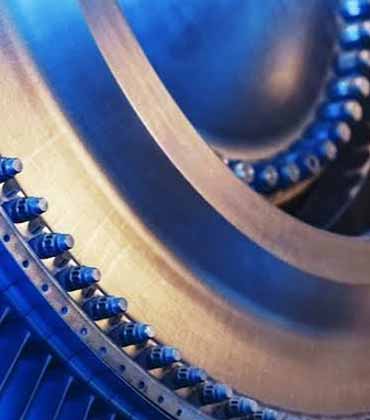
Gas Turbine Replacement Parts: Supporting Long-Term Power Generation Performance
Gas turbine replacement parts support reliability, efficiency, lifecycle management, predictive maintenance, and long-term operational performance improvements.

Operational Intelligence: Strengthening Predictive Asset Management Systems
AI-powered predictive maintenance transforms transformer reliability through data-driven insights, proactive fault detection, optimized asset lifecycles, and power infrastructure operations.
EDITORIAL
Strengthening the Grid for a More Demanding Future
Utilities are navigating a changing energy landscape where reliability, aging infrastructure, renewable integration and rising demand must be addressed together. This edition of Utilities Business Review examines how companies are extending asset life, improving grid intelligence and developing more flexible energy systems.
At the center is MYR Group Inc., named Top Transmission and Distribution Companies 2026, which is recognized for its role in an important part of the energy infrastructure landscape. MYR Group helps utilities to solve their challenges related to infrastructure demands as well as changing generation demands.
The Gas Turbine Replacement Parts Company of the Year 2026, UNEW, addresses another critical requirement by helping operators extend the life of existing gas turbine assets. Its engineering-led replacement parts are designed to match OEM performance while introducing improvements where appropriate.
Magnefy, recognized as Top AI-Powered Transformers Predictive Maintenance Solution 2026, applies electromagnetic sensing, machine learning and AI to identify transformer anomalies months before failure, supporting earlier maintenance decisions. Eddy System, named Top Intelligent Microgrid and Energy Optimization System 2026, combines hydro, solar and wind generation with automated controls to help facilities produce and consume energy closer to the point of use.
The edition’s leadership perspectives reinforce the importance of infrastructure planning. Jason McIlwee, P.E., Deputy Director of Utilities-Administration and Engineering at City of Charlottesville, emphasizes safe, reliable utility services while balancing engineering needs, affordability, sustainability and regulatory requirements. Lane Cheek, Director of Public Works at Town of Ponder, emphasizes proactive planning, responsible infrastructure investment and strong community partnerships to support sustainable growth.
Together, these stories point to a utility sector where reliability remains the constant amid rapid change. Explore the edition for practical perspectives on building, maintaining and modernizing the infrastructure needed for the energy systems ahead.
